
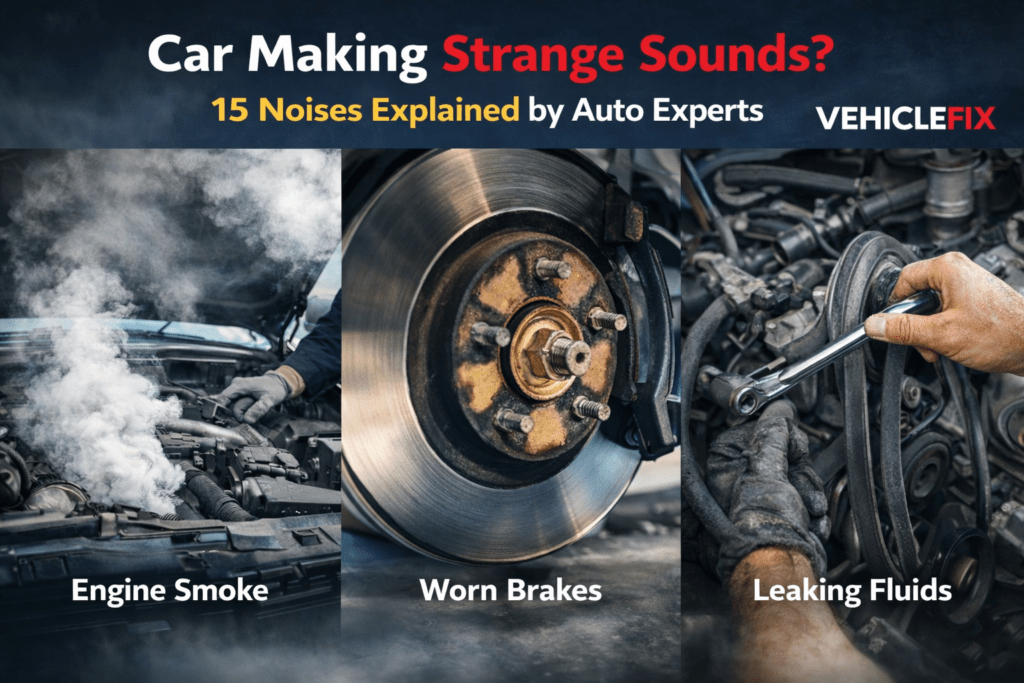
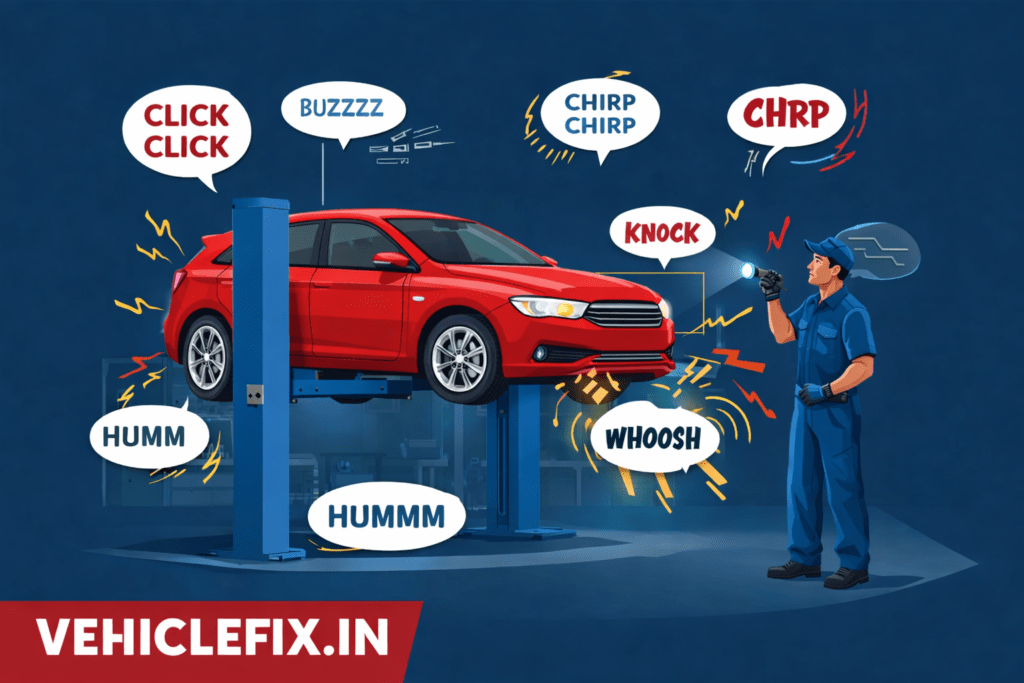
Has your car ever started making an odd noise while you were driving calmly? Your car may be requesting attention with a squeak, knock, grind, or hiss. Ignoring odd sounds can result in costly repairs and even endanger public safety. To help you understand what your car is trying to tell you, we’ll go over 15 common car noises, their causes, and professional solutions in this comprehensive guide.
Why You Should Never Ignore Car Noises
There are thousands of moving parts in your car. A warning sound is frequently produced when something wears out, loosens, or fails. Early problem solving can :
- Prevent costly repairs
- Improve fuel efficiency
- Increase vehicle lifespan
- Ensure road safety
Let’s now examine the most typical vehicle sounds and how to diagnose them .
1. Squealing Noises While Braking
When braking, a squealing sound typically indicates that your brake pads are worn out and need to be replaced. Additionally, dust, moisture, or rotor rust may be the culprit. To prevent safety hazards and expensive repairs, have your brakes checked if the noise persists.
Expert Tip: Replace brake pads immediately to avoid rotor damage.
2. Grinding Noises When Braking
When you brake, a grinding sound could indicate that your brake pads are totally worn down and making metal-to-metal contact with the rotors. It can also be a sign of material lodged in the braking system or damaged brake discs. Immediate evaluation is advised since ignoring this noise might result in expensive repairs and decreased braking performance.
Solution: Visit a professional mechanic for inspection.
3. Knocking Noises From the Engine
Engine knocking, a knocking sound produced by the engine, is frequently a sign of improper fuel combustion. Low-quality fuel, improper ignition timing, carbon buildup, or worn engine parts can all be the cause. It’s critical to have this noise checked out by a qualified mechanic right away because ignoring it could cause major engine damage.
Fix: Use high-quality fuel and get the engine checked.
4. Clicking Noise When Turning
When turning, a clicking sound typically indicates a damaged or worn CV joint in the drive shaft. It can also be brought on by steering fluid with low power or by loose suspension components. It is best to have it checked as soon as possible because ignoring the sound could result in steering issues.
Repair: Replace the CV joint promptly.
5. Hissing Noises Under the Hood
A radiator system issue, coolant leak, or vacuum leak are typically the causes of a hissing noise coming from beneath the hood. It may also happen if the engine overheats and steam escapes. It is advised to inspect the engine right away because ignoring this noise could cause damage.
Action: Check for overheating and inspect hoses.
6. Rattling Noise While Idling
An exhaust system issue, worn heat shields, or loose engine parts are frequently the causes of a rattling sound made while the engine is idling. Additionally, worn timing chain components or low engine oil may be the cause. To avoid more damage, it is best to have the car inspected if the noise persists.
Diagnosis: Inspect heat shields and exhaust system.
7. Whining Noise When Accelerating
A whining noise when accelerating may indicate issues with the transmission, power steering system, or worn belts. It can also be caused by low transmission or steering fluid levels. If the sound increases with speed, have your vehicle inspected to prevent serious damage.
Solution: Check and refill fluids immediately.
8. Thumping Noise From Tires
Typically, uneven tire wear, incorrect wheel alignment, or a damaged tire are indicated by a thumping sound coming from the tires. Low tire pressure or suspension problems may also be the cause. Driving stability may be impacted if you ignore the sound, so it’s best to have it checked right away.
Fix: Wheel alignment and tire balancing may be needed.
9. Squeaking From Suspension
Worn-out bushings, dry ball joints, or a lack of lubrication in suspension parts are typically the causes of a squeaking sound coming from the suspension. It might also be a sign of damaged struts or shock absorbers. Early inspection can guarantee a smoother, safer ride and stop additional wear.
Repair: Suspension inspection and part replacement.
10. Popping Sound From Exhaust
Unburned fuel igniting in the exhaust system is frequently the cause of an exhaust popping sound. Exhaust leaks, a rich air-fuel mixture, or malfunctioning spark plugs can all cause it. It is best to have the car checked if the popping persists in order to avoid further damage and performance problems.
Solution: Replace spark plugs and check ignition system.
11. Roaring Sound While Driving
When driving, a roaring sound frequently signals an issue with the tires, exhaust system, or wheel bearings. As the speed of the car increases, it might become louder. A prompt check is advised because it may compromise driving comfort and safety if disregarded.
solution ; Inspect and replace worn wheel bearings, check tire condition and alignment, and examine the exhaust system to eliminate the roaring noise.
12. Screeching Noise When Starting Car
A worn or loose serpentine belt slipping on the pulleys is typically the cause of a screeching sound when starting the vehicle. A faulty starter motor, a weak battery, or the belt tension being affected by the cold weather are other possibilities. To prevent breakdowns, the belt and any associated components should be inspected and replaced if the noise persists.
Fix: Replace the belt to prevent breakdown.
13. Ticking Sound From Engine
Low engine oil, poor lubrication, or damaged valve lifters are frequently the causes of an engine ticking. In certain cars, it may also be the result of typical injector noise. To avoid internal damage, it is essential to have the engine evaluated if the ticking gets louder or more persistent.
Action: Check oil level immediately.
14. Clunking Noise Over Speed Breakers
Over speed breakers, a clunking sound typically signals worn suspension parts like bushings, control arms, struts, or shock absorbers. Additionally, loose stabilizer bar links or steering may be the cause. Early inspection helps preserve ride comfort and stops additional suspension damage.
Solution: Inspect shock absorbers and links.
15. Grinding While Shifting Gears
Grinding when changing gears is typically a sign of low transmission fluid, worn clutch, or damaged synchronizers. Incorrect clutch adjustment may also be the cause. To avoid major transmission damage, immediate inspection and repair are advised.
Fix: Transmission inspection required.
How to Diagnose Car Noises Early
Here are some expert tips to identify issues quickly :
- Keep an eye out for the sounds (braking, turning, accelerating).
- Look for any dashboard warning lights.
- Regularly check the fluid levels.
- Plan for regular maintenance.
Preventive maintenance is always cheaper than major repairs.
When Should You Visit a Mechanic ?
You should visit a professional mechanic immediately if :
- The noise level is high or increasing.
- You experience steering problems or vibration.
- The vehicle overheats.
- There are warning lights.
Early diagnosis can save thousands in repair costs.
Frequently Asked Questions
1. Is it safe to drive a car that is making noise?
Depending on the noise, yes. While little squeaks might not be essential, sounds like grinding, knocking, or braking need to be addressed right away.
2. Can low engine oil cause engine noise?
Yes. Low oil reduces lubrication, leading to ticking or knocking sounds.
3. Why does my car make noise after servicing?
It may be due to loose components or improperly fitted parts. Visit the service center for rechecking.
4. How much does it cost to fix car noises?
Costs vary depending on the issue. Brake pad replacement is affordable, while transmission repairs can be expensive.
5. How often should I service my car to avoid noise problems?
Generally, every 6 months or 5,000–10,000 km, depending on your vehicle type and usage.
Automobile noises are early warning indicators that must never be disregarded. A prompt diagnosis can stop more serious damage, whether it’s a minor brake pad replacement or a major engine problem. Maintaining your car properly, getting regular servicing, and listening for odd noises will keep it in good working order for many years.
Don’t wait if your car is making odd noises. Drive with confidence after having it inspected by knowledgeable experts. like Vehiclefix