
Modern cars are packed with electrical systems that make driving safer, more comfortable, and more convenient. From headlights and power windows to infotainment systems and air conditioning, almost every feature depends on electricity. Protecting these electrical circuits is one small but extremely important component—the car fuse box.
Many vehicle owners panic when a headlight, horn, or power window suddenly stops working. In many cases, the issue isn’t an expensive repair—it could simply be a blown fuse.
In this comprehensive VehicleFix Car Fuse Box Guide, you’ll learn everything about car fuse boxes, how they work, common fuse problems, replacement procedures, maintenance tips, and when you should visit a professional workshop.
What is a Car Fuse Box?
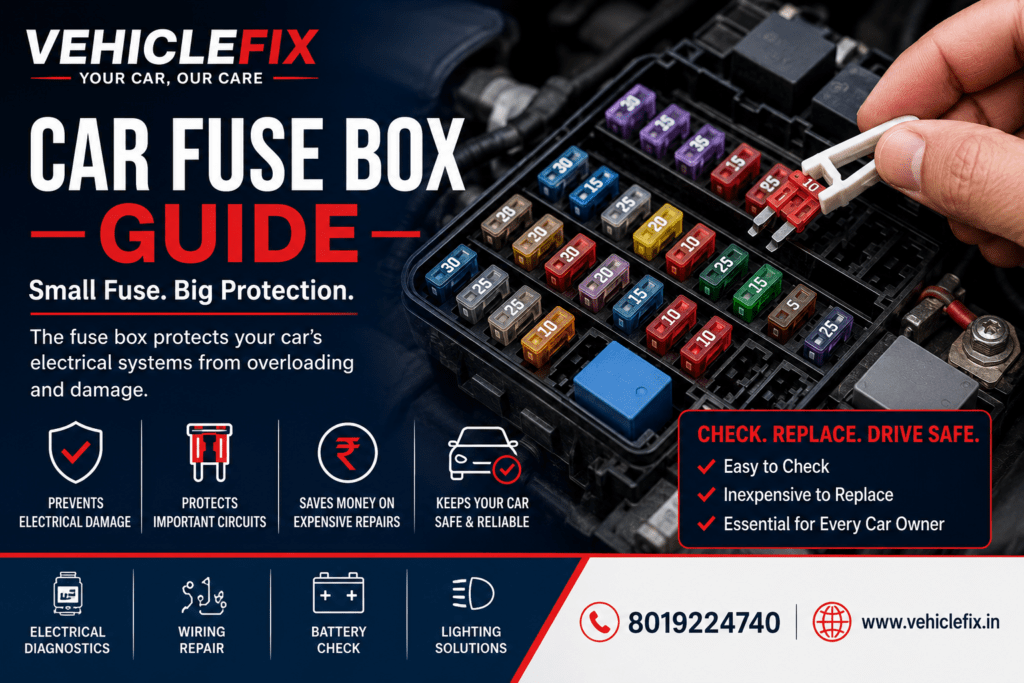
A car fuse box is a protective electrical distribution center that houses multiple fuses controlling different electrical components in your vehicle.
Each fuse protects a specific electrical circuit. If excessive current flows through that circuit due to a fault or short circuit, the fuse melts internally and disconnects the circuit before expensive electrical components become damaged.
Think of a fuse as a safety guard that sacrifices itself to protect your vehicle.
Why are Car Fuses Important?
Car fuses protect expensive electrical systems from:
- Short circuits
- Electrical overload
- Faulty wiring
- Water damage
- Component failure
- Fire hazards
Without properly functioning fuses, even a minor electrical issue could damage sensitive modules costing thousands of rupees.
Where is the Fuse Box Located?
Most vehicles have two fuse boxes.
1. Interior car Fuse Box
Usually located:
- Under the dashboard
- Below the steering wheel
- Inside the glove compartment
- Driver-side kick panel
This fuse box protects interior electronics such as:
- Power windows
- AC controls
- Audio system
- Interior lights
- Horn
- USB charging ports
2. Engine Bay car Fuse Box
Located under the hood.
This fuse box controls:
- Engine Control Unit (ECU)
- Cooling fan
- Fuel pump
- Starter motor
- ABS system
- Headlights
- Battery charging system
How Does a Car Fuse Work?
Every fuse contains a thin metal strip.
When current exceeds the fuse’s rated capacity:
- The metal strip heats up.
- The strip melts.
- Electrical flow stops.
- The circuit is protected.
Instead of damaging expensive electronics, only the inexpensive fuse needs replacement.
Common Types of Car Fuses
Blade Fuse
The most common fuse used in modern vehicles.
Available in different amperage ratings and colors.
Examples:
- 5A
- 7.5A
- 10A
- 15A
- 20A
- 25A
- 30A
- 40A
Mini Blade Fuse
Smaller version used in compact fuse boxes.
Micro Fuse
Found in newer cars with advanced electronics.
Cartridge Fuse
Used for high-current circuits like:
- ABS
- Cooling fan
- Starter
- Battery circuits
PAL Fuse
Heavy-duty fuse designed for high-power applications.
Fuse Color Chart
| Fuse Rating | Color |
|---|---|
| 5A | Tan |
| 7.5A | Brown |
| 10A | Red |
| 15A | Blue |
| 20A | Yellow |
| 25A | White |
| 30A | Green |
| 40A | Orange |
Always verify the rating using your owner’s manual before replacing any fuse
Signs of a Blown Car Fuse
A blown fuse often causes one specific feature to stop working.
Common symptoms include:
- Headlights not working
- Horn failure
- Power windows stopped
- Central locking malfunction
- AC blower not running
- Radio not turning on
- USB charging ports dead
- Dashboard lights off
- Windshield wipers not functioning
- Reverse lights not working
If multiple systems fail simultaneously, the issue may involve a relay, wiring, or battery rather than a fuse alone.
Common Reasons Car Fuses Blow
Electrical Short Circuit
Damaged wires touching metal surfaces create excessive current.
Water Intrusion
Moisture entering connectors or fuse boxes causes electrical faults.
Faulty Accessories
Poor-quality LED lights, aftermarket stereos, or accessories can overload circuits.
Incorrect Fuse Installation
Installing a fuse with a higher amperage than recommended can damage wiring and components.
Old Age
Although uncommon, fuses can weaken over time due to repeated heating and cooling cycles.
Damaged Components
A failing motor, fan, or pump may draw excessive current and repeatedly blow the same fuse.
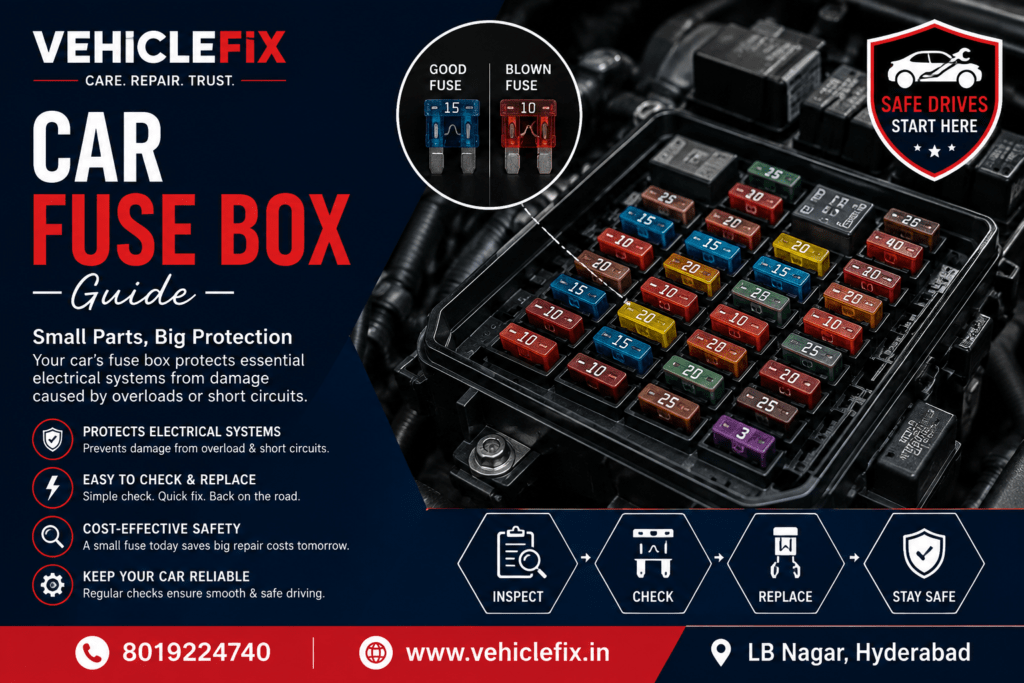
How to Check a Blown Fuse
Follow these simple steps:
Step 1
Turn off the ignition.
Step 2
Locate the correct fuse box.
Step 3
Use the fuse diagram inside the cover.
Step 4
Remove the suspected fuse using the fuse puller.
Step 5
Inspect the metal strip inside.
If broken or burnt, the fuse has blown.
Can You Replace a Car Fuse Yourself?
Yes.
Replacing a fuse is one of the easiest DIY maintenance tasks.
You need:
- Fuse puller
- Correct replacement fuse
- Owner’s manual
Simply remove the damaged fuse and install another with the exact same amperage rating.
Important Safety Tips
Never:
- Replace a 10A fuse with a 20A fuse.
- Use wire instead of a fuse.
- Install aluminum foil as a temporary solution.
- Ignore repeatedly blown fuses.
Doing so may cause:
- Wiring damage
- ECU failure
- Fire hazards
- Expensive repairs
What Happens if the Same Fuse Keeps Blowing?
A repeatedly blown fuse indicates an underlying problem such as:
- Short circuit
- Damaged wiring
- Faulty switch
- Failed motor
- Water leakage
- Electrical module failure
Replacing the fuse repeatedly will not solve the issue.
Professional electrical diagnosis is recommended
Fuse vs Relay
Many people confuse relays with fuses.
| Fuse | Relay |
|---|---|
| Protects circuits | Controls circuits |
| Melts when overloaded | Uses electromagnetic switching |
| Must be replaced after blowing | Usually reusable |
| Prevents electrical damage | Operates high-current devices |
Maintenance Tips for Your Fuse Box
To keep your electrical system reliable:
- Inspect fuse boxes during routine servicing.
- Keep the fuse box dry and clean.
- Replace damaged covers immediately.
- Avoid cheap aftermarket accessories.
- Use manufacturer-recommended fuse ratings.
- Check battery terminals regularly.
- Inspect wiring after accident repairs.
- Address electrical issues promptly.
When Should You Visit VehicleFix?
DIY fuse replacement is suitable for a single blown fuse. However, professional inspection is recommended if:
- Fuses blow repeatedly.
- Burning smells are present.
- Dashboard warning lights appear.
- Battery drains overnight.
- Multiple electrical systems fail.
- Water enters the fuse box.
- Wiring has been modified.
- Rodent damage is suspected.
At VehicleFix, our technicians use advanced diagnostic equipment to identify electrical faults accurately, ensuring reliable repairs while protecting your vehicle’s sensitive electronic systems.
Why Choose VehicleFix for Electrical Repairs?
VehicleFix offers professional automotive electrical diagnostics and repairs for all major car brands.
Our services include:
- Complete electrical diagnostics
- Fuse replacement
- Wiring repairs
- Battery testing
- Alternator inspection
- Starter motor diagnostics
- ECU scanning
- OBD diagnostics
- Lighting system repairs
- AC electrical troubleshooting
Our experienced technicians use modern diagnostic tools to deliver accurate solutions while minimizing repair time and costs.
Final Thoughts
Your car’s fuse box may be small, but it plays a vital role in protecting every electrical system in your vehicle. Understanding how fuses work, recognizing the signs of a blown fuse, and replacing them correctly can save time, money, and unnecessary stress.
However, if the same fuse continues to blow or multiple electrical components fail, it’s important to seek professional assistance rather than relying on repeated fuse replacements. Regular inspections and timely maintenance help keep your vehicle’s electrical system safe and dependable.
Whether you need a simple fuse replacement or advanced electrical diagnostics, VehicleFix is here to help keep your car running smoothly and safely.
Frequently Asked Questions (FAQs)
1. What does a car fuse box do?
A car fuse box protects your vehicle’s electrical circuits by disconnecting power when excessive current flows, preventing damage to wiring and electronic components.
2. How can I tell if a car fuse is blown?
Remove the fuse and inspect the metal strip inside. If it is broken or burnt, the fuse has blown and should be replaced with one of the same amperage.
3. Can I drive with a blown fuse?
Yes, if the blown fuse only affects a non-essential feature. However, if it controls critical systems like headlights, wipers, or the fuel pump, you should replace it before driving.
4. Why does the same fuse keep blowing?
A repeatedly blown fuse usually indicates an underlying electrical problem such as a short circuit, damaged wiring, or a faulty component. It should be diagnosed by a professional technician.
5. Can I replace a 10A fuse with a 15A fuse?
No. Always replace a blown fuse with another fuse of the exact same amperage rating recommended by the vehicle manufacturer.
6. Where is the fuse box located in a car?
Most cars have one fuse box inside the cabin (under the dashboard or glove compartment) and another in the engine bay under the hood.
7. How much does fuse replacement cost?
A standard automotive fuse is inexpensive, but the total repair cost depends on whether there is an underlying electrical issue that needs diagnosis and repair.
8. What tools do I need to replace a fuse?
You typically need a fuse puller or needle-nose pliers and a replacement fuse with the correct amperage rating. Most vehicles include a fuse puller inside the fuse box.
9. Can a blown fuse drain my car battery?
A blown fuse itself usually does not drain the battery. However, the electrical fault that caused the fuse to blow may contribute to battery drain.
10. Does VehicleFix repair car electrical issues?
Yes. VehicleFix provides professional electrical diagnostics, fuse replacement, wiring repairs, battery testing, alternator checks, ECU diagnostics, OBD scanning, and complete automotive electrical repair services for most vehicle brands.